
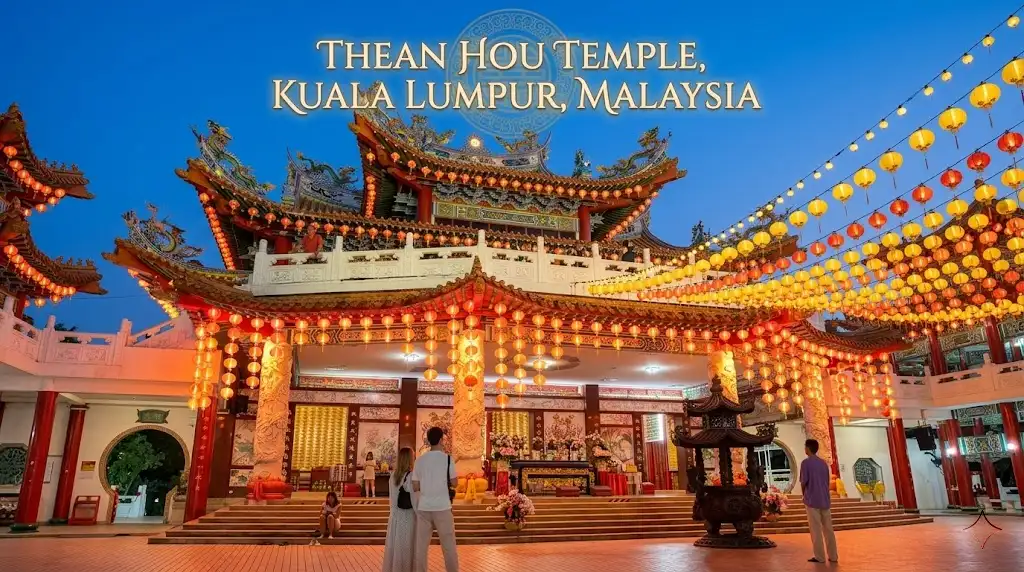
Thean Hou Temple in Kuala Lumpur Malaysia is one of the most beautiful and most visited Chinese temples in the city. It is famous for its hilltop views, red lanterns, detailed Chinese architecture, and a peaceful spiritual feel. At the same time, it is also a very practical stop for travelers because entry is free, it is easy to fit into a Kuala Lumpur itinerary, and it gives you strong photo spots in one place.
If you are planning a visit, this guide will help you understand what the temple is, where it is, how to get there, what to wear, when to go, and what you can actually do once you arrive. I will also cover the history, the gods worshipped here, Chinese New Year crowds, photography rules, marriage registration, and the most common questions travelers ask before visiting.
What is Thean Hou Temple in Kuala Lumpur Malaysia?
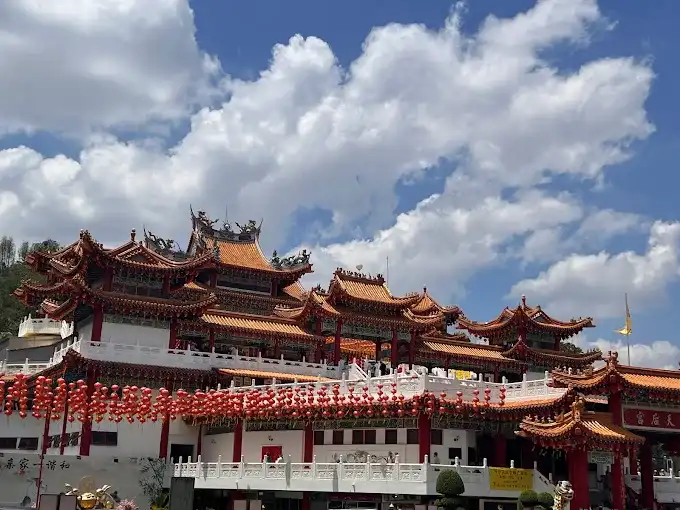
Thean Hou Temple in Kuala Lumpur Malaysia is a six-tier Chinese temple on Robson Heights that is dedicated to Mazu, the sea goddess. It is one of the largest Chinese temples in Southeast Asia and is known for free entry, red lanterns, skyline views, and its mix of Buddhist, Taoist, and Confucian worship.
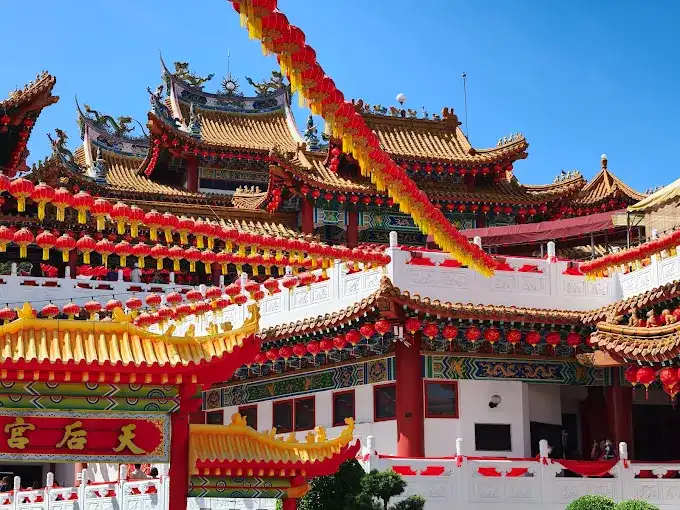
- Structure and Location: It is a six-tier (six-tiered) Chinese temple. It is situated on 1.67 acres of land atop Robson Heights (also known as Robson Hill).
- Dedications: The temple is primarily dedicated to Mazu, the Chinese sea goddess (also known as Thean Hou or the Goddess of Heaven).
- Scale: It is widely recognized as one of the largest and oldest Chinese temples in Southeast Asia.
- Religious Fusion: It represents a spiritual blend, incorporating elements of Buddhism, Taoism, and Confucianism.
- Key Attractions:
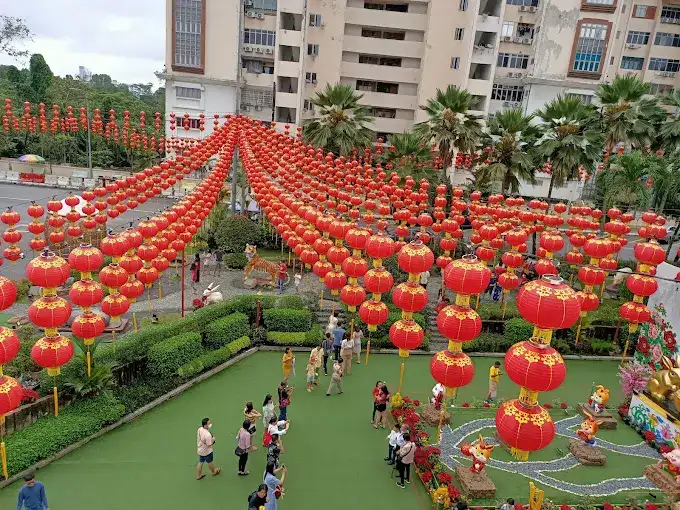
- Red Lanterns: The temple is famous for its thousands of vibrant red lanterns, which are especially striking during festivals like Chinese New Year.
- Skyline Views: Its hilltop position offers panoramic views of the Kuala Lumpur city skyline.
- Entry: Admission to the temple grounds is free for all visitors.
- Red Lanterns: The temple is famous for its thousands of vibrant red lanterns, which are especially striking during festivals like Chinese New Year.
The temple was built by the Hainanese community in Malaysia, completed in 1987, and officially opened in 1989.
Quick facts:
- Address: 65, Persiaran Endah, Taman Persiaran Desa, 50460 Kuala Lumpur, Wilayah Persekutuan Kuala Lumpur, Malaysia
- Main deity: Mazu, also called Thean Hou
- Entry fee: Free
- Best known for: Temple views, lanterns, and wedding ceremonies
- Main appeal: It is both a religious site and a tourist attraction
What does Thean Hou mean?
Thean Hou is a Hokkien term that refers to the Goddess of Heaven or Heavenly Empress. In this temple, the name is closely linked to Mazu, the Chinese sea goddess who protects sailors, fishermen, and travelers. That is why the temple feels spiritual and calming, but also deeply tied to Chinese culture and history.
Why is Thean Hou Temple famous in Malaysia?
The temple is famous because it offers more than just prayer halls. Visitors come here for:
- Beautiful Chinese architecture
- Red lantern decorations
- Panoramic views of Kuala Lumpur
- A strong cultural and religious atmosphere
- Wedding registration ceremonies
- Festive Chinese New Year celebrations
It stands out because it gives you culture, history, and city views in one stop. That is why it is often included in KL travel guides and temple lists.
Where is Thean Hou Temple located in Kuala Lumpur?
Thean Hou Temple is located on a hill in Robson Heights, near Seputeh, south of Kuala Lumpur city center. Its elevated location is one of the main reasons the temple feels special, because you get open city views from the grounds.
Exact location and address
The commonly used address is:
65, Persiaran Endah, Taman Persiaran Desa, 50460 Kuala Lumpur, Wilayah Persekutuan Kuala Lumpur, Malaysia
This area is easy to remember as a hilltop temple in southern KL, not far from major city landmarks like KL Sentral, Brickfields, and Bangsar.
Nearby landmarks and areas
If you are planning your route, these nearby places can help:
- KL Sentral
- Brickfields
- Bangsar
- Little India Brickfields
- Old Klang Road
- Mid Valley area
This makes the temple a good stop if you are already exploring the central and southern part of Kuala Lumpur.
How to get to Thean Hou Temple in Kuala Lumpur?
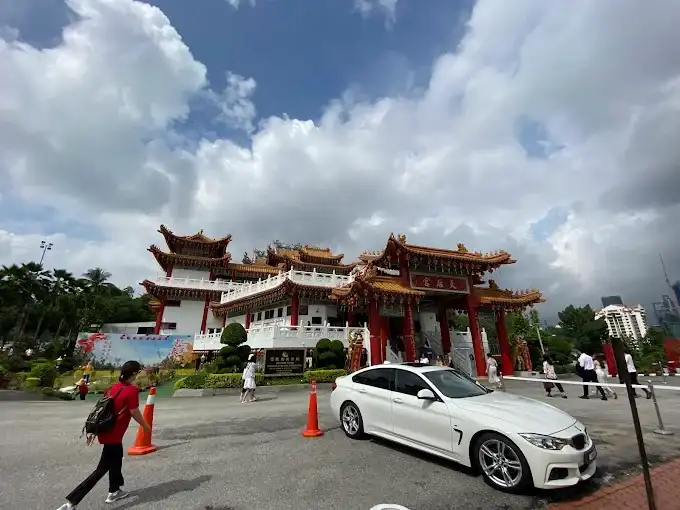
The easiest way to reach Thean Hou Temple is usually by Grab or taxi. The temple sits on a hill, so while public transport can get you close, you still need a short ride or uphill walk at the end.
Getting there by Grab or taxi
This is the most convenient option, especially for first-time visitors.
Why this works well:
- No need to worry about route changes
- You get dropped near the entrance
- It is easier in hot weather or if you are traveling with family
- It saves time if you are combining the temple with other KL stops
A Grab ride from places like KL Sentral or Bangsar is usually the simplest choice. If you are traveling with older family members, this is the best option because the uphill approach can feel tiring in the heat.
Getting there by public transport
Public transport can help you get near the temple, but it does not take you right to the main entrance.
A common way is:
- Take the LRT or Monorail toward KL Sentral or Bangsar
- Continue with a short Grab or taxi ride
- In some cases, you may need to walk uphill
This option is okay if you are on a budget, but it is not the smoothest way to arrive. The temple is much easier to enjoy when you do not arrive already tired.
Getting there by car or driving
If you are driving, the temple has parking available, but it can get busy during weekends and festival periods.
Practical driving tips:
- Arrive early if you want easier parking
- Be careful on the hill road
- Weekdays are usually calmer than weekends
- Chinese New Year traffic can be heavy
If you are planning a full day in Kuala Lumpur, driving can work well, especially if you want to pair the temple with another stop like Brickfields or Mid Valley.
What are the opening hours and entrance fee of Thean Hou Temple?
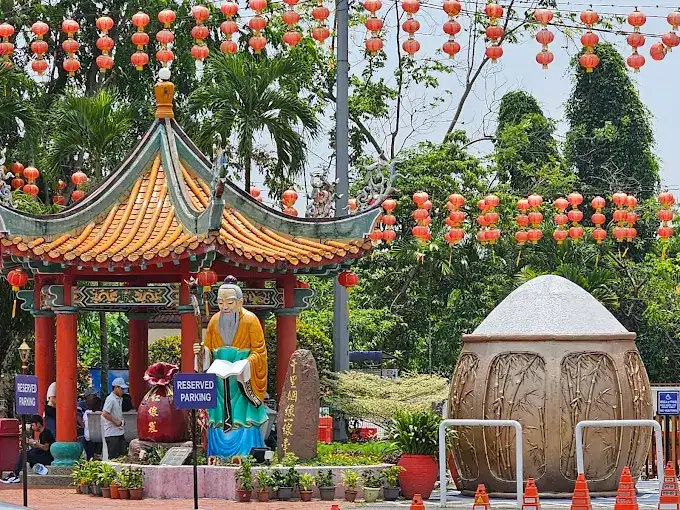
Thean Hou Temple is usually open every day from 8:00 AM to 8:00 PM. Some festival periods may run later, especially when the grounds are decorated for evening visitors.
Daily opening hours
The usual opening hours are:
- Daily: 8:00 AM to 8:00 PM
These hours can change during special events, so it is smart to check the temple’s official updates before you go. That is especially helpful during Chinese New Year or other religious festivals.
Is Thean Hou Temple free to enter?
Yes, Thean Hou Temple is free to enter. There is no standard entrance fee for visitors.
That makes it one of the best low-cost attractions in Kuala Lumpur. You can walk around, take photos, enjoy the views, and see the architecture without spending money on admission. Donations are welcome, but they are not required.
What is the best time to visit Thean Hou Temple?
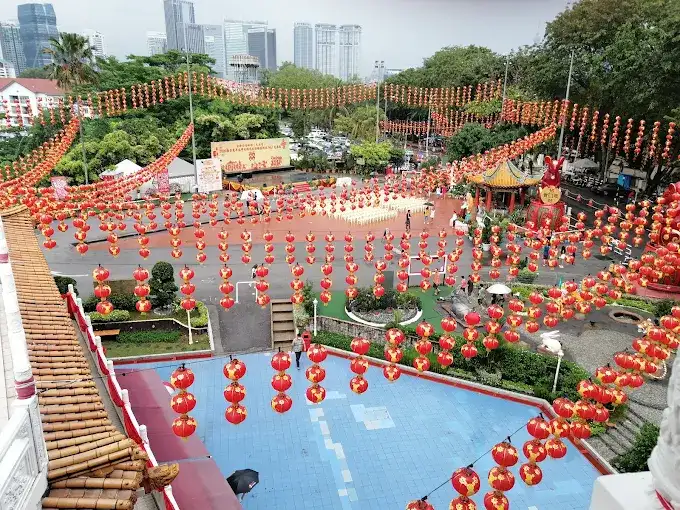
The best time to visit Thean Hou Temple depends on what you want most. If you want fewer people and softer light for photos, go in the early morning. If you want glowing lanterns and a nicer city view, go later in the day.
Best time of day to visit
For most travelers, the best time is:
- 8:00 AM to 10:00 AM for fewer crowds and cooler weather
- Late afternoon to sunset for beautiful lighting and skyline views
Why morning works well:
- Less heat
- Less crowd
- Easier parking
- Better photo conditions
- More peaceful temple atmosphere
Why evening works well:
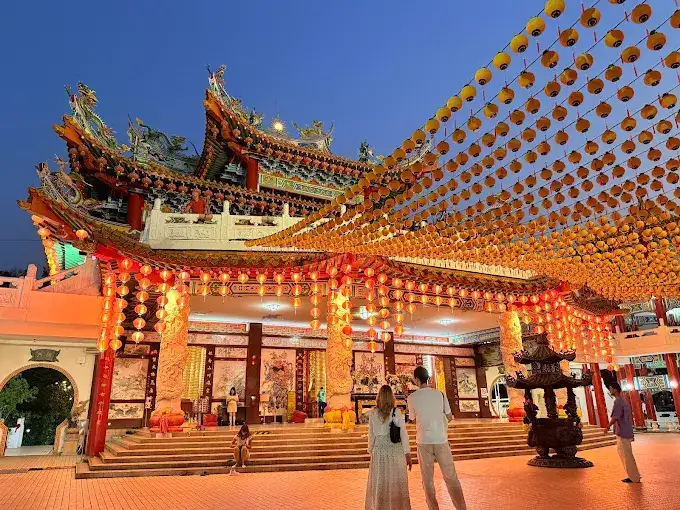
- Red lanterns look better
- The city feels more dramatic from the hill
- The temple has a more romantic feel
Best season and festivals
The most exciting time to visit is during Chinese New Year. The temple is decorated with hundreds or even thousands of red lanterns, and the whole place feels lively and festive.
Best seasonal reasons to visit:
- Chinese New Year for lanterns and celebrations
- Wesak Day for a spiritual atmosphere
- Mazu’s Birthday for cultural importance
Important tip:
If you do not like crowds, avoid the first few days of Chinese New Year. If you want the full festive look for photos, then this is one of the best times of the year.
Practical usage:
If you only have half a day in KL, visit Thean Hou Temple in the morning, spend 1 to 2 hours there, then continue to Brickfields or KL Sentral for lunch. That gives you a clean, easy travel flow without rushing.
What can you see and do at Thean Hou Temple?
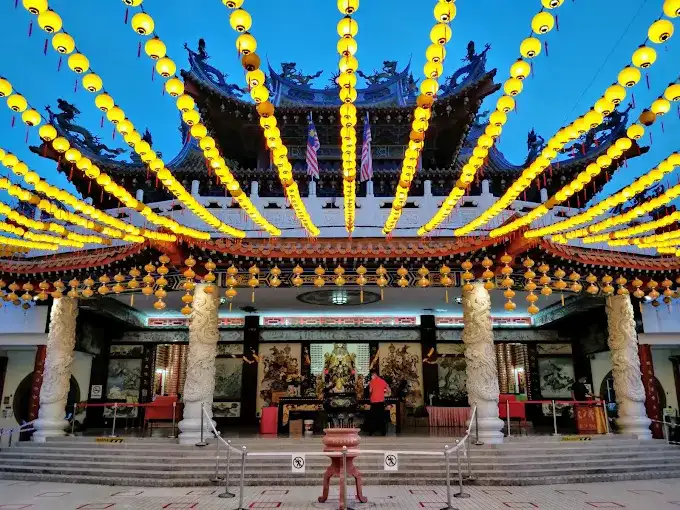
Thean Hou Temple is not just a place to take one photo and leave. It has several areas worth exploring, and each one gives you a different part of the experience.
Visit the main prayer hall
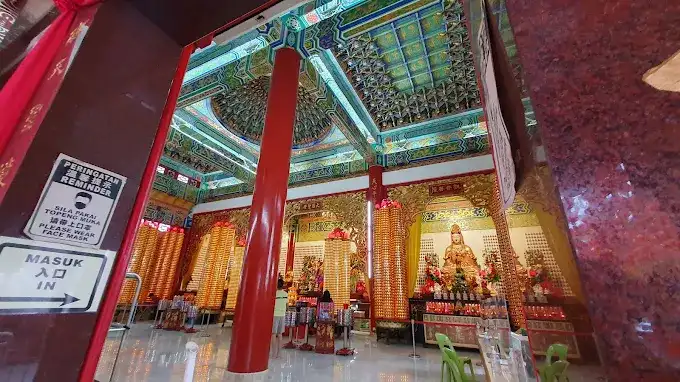
The main prayer hall is the heart of the temple. It sits on the upper level and is used by worshippers who come to pray, make offerings, and seek blessings.
Inside, you will see:
- Altars
- Incense
- Statues of the main deities
- Traditional Chinese religious details
If you enter the prayer hall, keep your behavior quiet and respectful. This is still an active place of worship, not just a tourist stop.
Explore the Chinese zodiac garden
The Chinese zodiac garden is one of the most interesting parts of the temple grounds. It features the 12 animals of the Chinese zodiac, which makes it fun for both adults and children.
You can use this area to:
- Take photos
- Learn about Chinese astrology
- Find your zodiac animal
- Walk around at an easy pace
This part of the temple is especially useful if you are traveling with family because it mixes education and sightseeing in one stop.
See the red lantern decorations
The red lanterns are one of the biggest reasons people love taking Thean Hou Temple photos. They create a strong visual contrast against the temple’s red pillars and gold details.
The lanterns are especially photogenic because:
- Red symbolizes luck and happiness in Chinese culture
- They look beautiful in daylight
- They glow warmly at night
- They become even more dramatic during festivals
If you want strong photos, try to capture the temple from the steps, lantern walkways, and open terrace areas.
Enjoy panoramic views of Kuala Lumpur
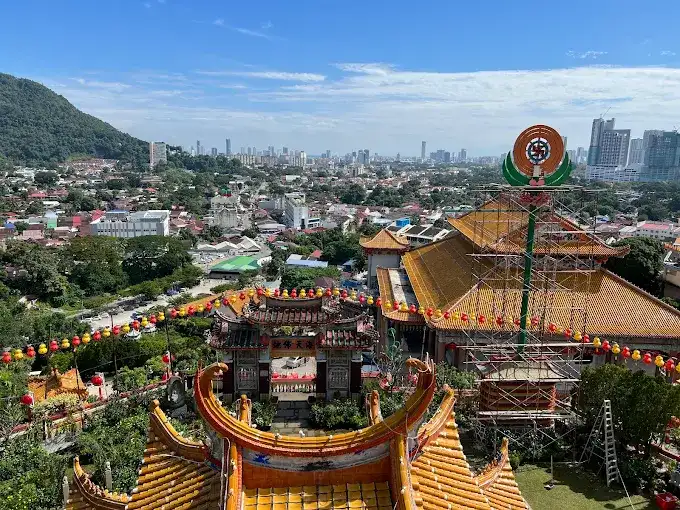
Because the temple is on a hill, you can enjoy wide views of the city skyline. On a clear day, this can be one of the nicest free views in Kuala Lumpur.
You may be able to see:
- City buildings
- Road networks below
- Parts of the Kuala Lumpur skyline
- A calm contrast between the temple and the busy city
This is one reason the temple is popular with photographers. It gives you a spiritual site and a city overlook at the same time.
Visit the tortoise pond and wishing well
The tortoise pond and wishing well are small but meaningful parts of the grounds. Many visitors enjoy them because they add a peaceful, traditional feeling to the visit.
Why people like them:
- They feel calm and family-friendly
- They offer more photo spots
- They connect to Chinese cultural symbols of luck and long life
There are also other details worth noticing, like the Chinese medicinal herb garden and stone carvings that reflect traditional values.
What is the dress code for Thean Hou Temple?
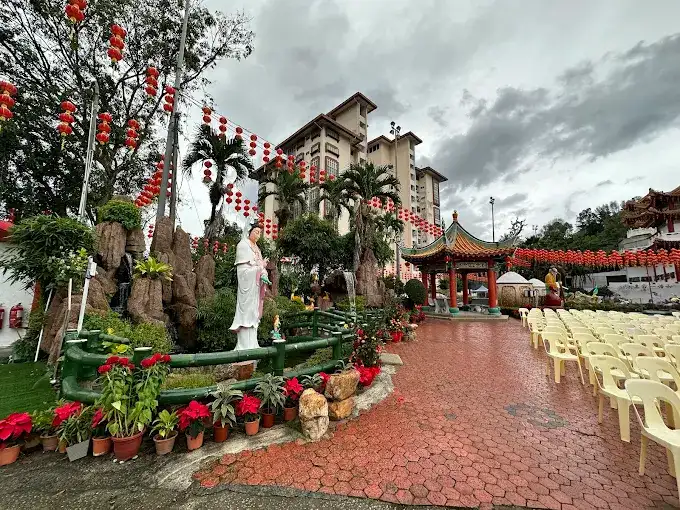
The dress code at Thean Hou Temple is simple. Wear modest clothing and dress with respect because this is an active religious site.
What should tourists wear?
Good choices include:
- T-shirts with sleeves
- Long or knee-length shorts
- Long pants
- Comfortable walking shoes
- Light clothing that still covers your shoulders
You should avoid:
- Very short shorts
- Short skirts
- Sleeveless tops
- See-through clothing
- Beachwear
Cultural rules and restrictions
A few basic rules help you fit in better:
- Keep your voice low inside prayer areas
- Remove your shoes where required
- Do not block worshippers while taking photos
- Do not touch statues or offerings
- Be respectful during prayers
A lot of travelers ask, “Can ladies wear shorts in Malaysia?” The answer is yes in general, but for temples, modest clothing is always the better choice. That is why covering shoulders and knees is the safest rule here.
What is the history of Thean Hou Temple?
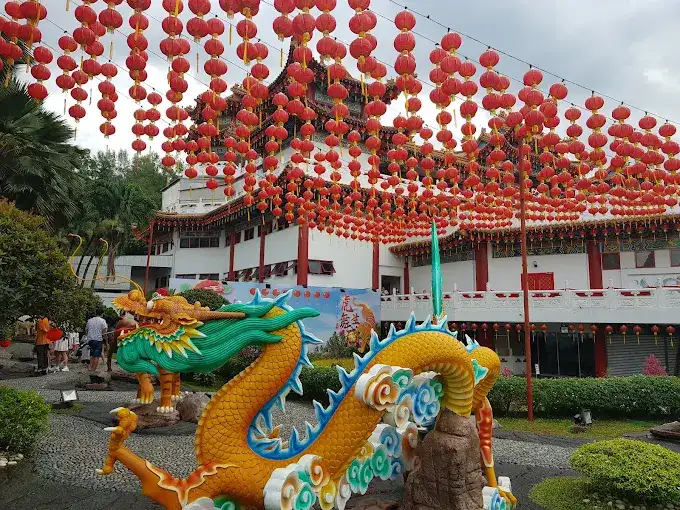
Thean Hou Temple has a modern history, but its cultural roots are much older. It was built by the Hainanese community in Malaysia, with support from the Hainan Association, to give local Chinese devotees a place to worship Mazu and continue their traditions.
Who built Thean Hou Temple in Malaysia?
The temple was built by the Hainanese community in Kuala Lumpur. This group wanted a strong cultural and religious home for Chinese worship, especially for people who followed Mazu traditions.
That is one reason the temple matters so much. It is not just a tourist site. It is also a symbol of community effort and identity.
Construction and opening timeline
The temple was:
- Completed in 1987
- Officially opened in 1989
It was designed as a modern temple with traditional Chinese elements. That mix is one of the reasons it looks so striking today.
The architecture uses:
- Red columns
- Ornate roof details
- Dragon designs
- Decorative ceilings
- Traditional Chinese layout ideas
This blend of old and new is what makes Thean Hou Temple stand out from many other temples in the region.
Which gods are worshipped at Thean Hou Temple?
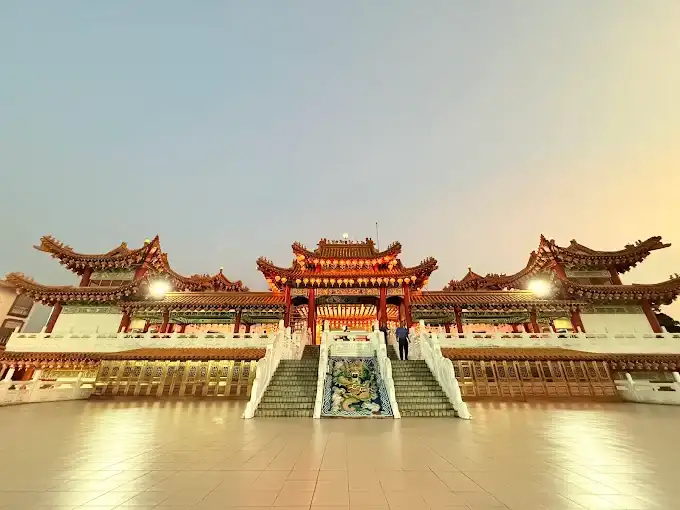
Thean Hou Temple is dedicated to several important figures from Chinese belief. The temple blends Buddhist, Taoist, and Confucian traditions, which makes it spiritually rich and culturally layered.
Mazu (Goddess of the Sea)
Mazu is the main deity at Thean Hou Temple. She is also known as the Goddess of Heaven or Goddess of the Sea.
She is believed to:
- Protect sailors
- Protect fishermen
- Guide travelers
- Bring safety and peace
This is why the temple feels meaningful even to visitors who are not deeply religious. Mazu represents protection, comfort, and blessing.
Guan Yin (Goddess of Mercy)
Guan Yin is another important deity in the temple. She is known as the Goddess of Mercy and is often linked to compassion, kindness, and healing.
Many people visit her altar to ask for:
- Peace
- Good health
- Family harmony
- Compassion in daily life
Shui Wei Sheng Niang
Shui Wei Sheng Niang is the Goddess of the Waterfront. She is linked to water safety and travel protection.
Her presence fits the sea goddess theme of the temple, and it adds to the strong cultural meaning of the site.
Yue Lao (God of Marriage)
Yue Lao is the God of Marriage. Many couples notice his presence because he is linked to love, relationships, and marriage blessings.
This is one reason Thean Hou Temple is popular with couples, especially those who want a symbolic and beautiful place for marriage registration or wedding photos.
Is fortune telling available at Thean Hou Temple?
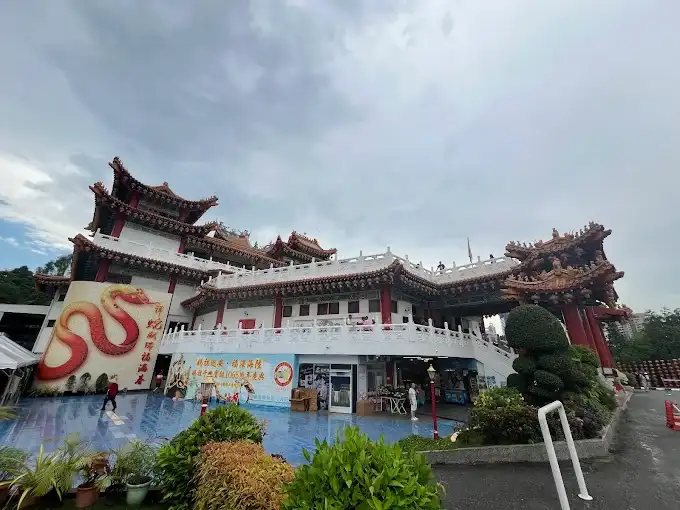
Fortune telling and divination practices may be available in Chinese temple settings, but the exact setup can change over time. In temples like Thean Hou Temple, visitors sometimes seek guidance through fortune sticks or traditional prayer methods.
How fortune telling works at the temple
If available, it usually works like this:
- You pray or ask your question quietly
- You may shake a cylinder of numbered sticks
- A stick falls out, which matches a fortune reading
- You then look for the matching interpretation
Some visitors do this out of curiosity, while others do it for spiritual reasons.
Cultural significance
Fortune telling is part of a larger Chinese religious tradition. For many people, it is less about predicting the future and more about:
- Seeking comfort
- Reflecting on a decision
- Asking for blessings
- Feeling connected to tradition
If you want to try it, ask politely at the temple. Different areas and practices can change, so it is best not to assume the setup will always be the same.
Is photography allowed inside Thean Hou Temple?
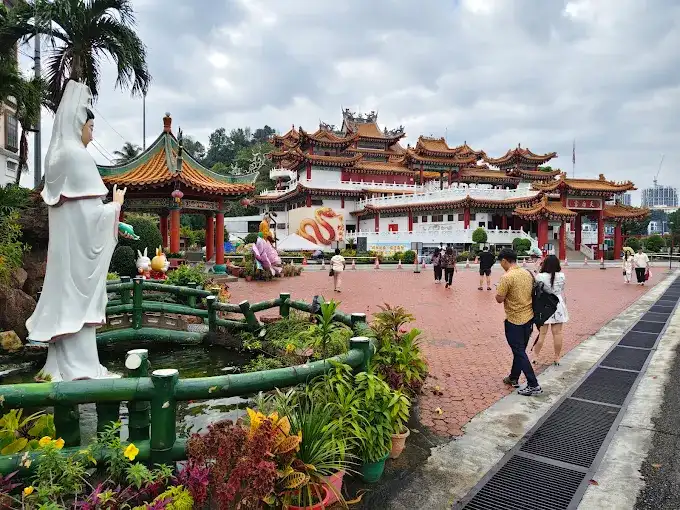
Photography is generally allowed in many parts of Thean Hou Temple, but you must be respectful. Since this is an active religious site, the best approach is to photograph the public areas without disturbing worshippers.
Photography rules
Follow these simple rules:
- Avoid flash in prayer areas
- Do not block the walkway
- Do not photograph people praying without permission
- Keep your gear compact if the temple is crowded
- Respect signs that limit photography
Best photo spots
If you want the best Thean Hou Temple photos, try these spots:
- The front staircase
- The lantern walkway
- The open terrace with skyline views
- The red columns near the entrance
- The zodiac garden
- The upper levels during sunset
Best photo tip:
Morning light is soft and clean. Evening light gives you richer colors and glowing lanterns. If you want both, arrive before sunset and stay until the lights come on.
What happens during Chinese New Year at Thean Hou Temple?
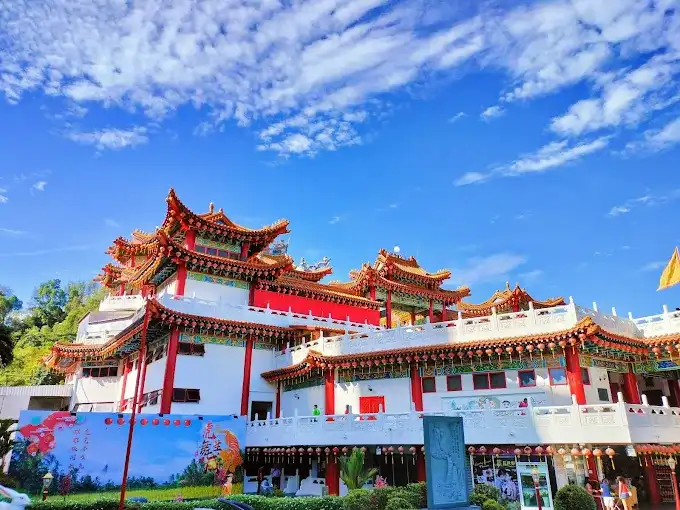
Chinese New Year is one of the most lively times to visit Thean Hou Temple. The temple is decorated in bright red, and the whole atmosphere becomes energetic, festive, and very photogenic.
Lantern festival experience
During Chinese New Year, you can expect:
- Red lantern displays
- Festive decorations
- Incense and prayers
- A busier crowd
- More photo opportunities
- Cultural performances at times
This is the period when the temple feels most alive. If you want the classic postcard look of Thean Hou Temple, Chinese New Year is the season that gives it to you.
Crowd and visiting tips
The main downside is the crowd. The temple can become very busy, especially:
- On weekends
- During public holidays
- In the first days of Chinese New Year
To handle that better:
- Arrive early
- Use Grab instead of driving if possible
- Go on a weekday if your schedule allows
- Check the temple’s official Facebook page for event updates
That last step matters because festival schedules can change, and the temple often shares useful updates online.
What is marriage registration (ROM) at Thean Hou Temple?
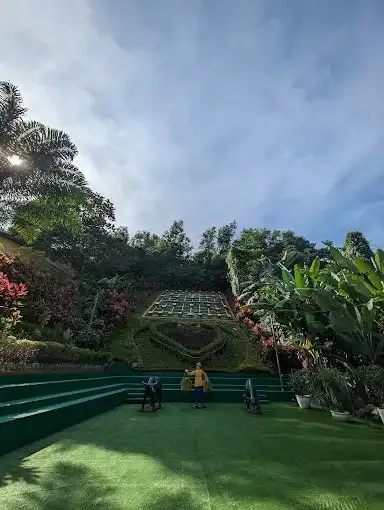
Thean Hou Temple is also known for marriage registration and ceremonial use. Many couples choose it because it offers a beautiful, meaningful setting for a wedding-related event.
How to register marriage
The exact process can vary, but in general couples need to:
- Check the legal registration requirements
- Prepare documents in advance
- Book a date early
- Confirm temple rules for ceremonies
- Arrive on time with witnesses if needed
Since marriage registration involves legal and religious details, it is best to contact the temple and the proper Malaysian registration office before planning your ceremony.
Requirements and dress code
For wedding or registration events, the dress code is more formal than a normal sightseeing visit.
Good choices:
- Formal dress
- Smart shirt and trousers
- Covered and neat outfits
Avoid:
- Jeans
- Slippers
- T-shirts that look too casual
- Clothing that is too revealing
This is a good example of why Thean Hou Temple is important. It is not only a tourist site. It is also part of real family milestones.
Why should you visit Thean Hou Temple in Kuala Lumpur?
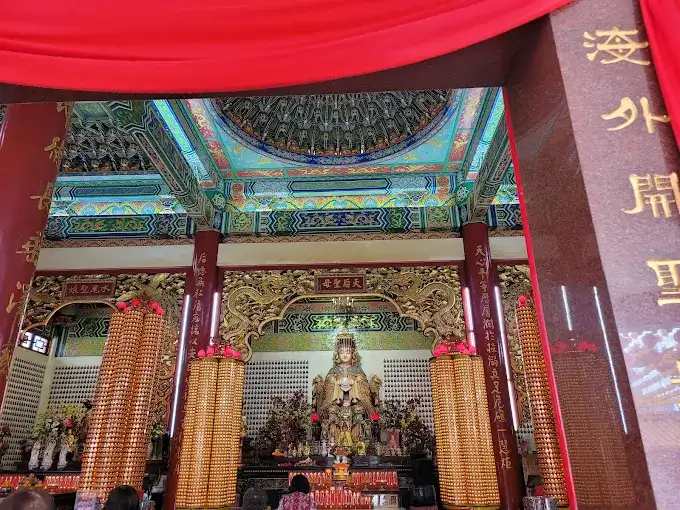
You should visit Thean Hou Temple because it gives you a lot in one stop. You get cultural depth, peaceful views, temple architecture, and a strong sense of place.
Cultural importance
The temple shows:
- Chinese heritage in Malaysia
- Hainanese community history
- Religious traditions that are still active today
- A beautiful mix of faith and public space
If you want to understand Kuala Lumpur beyond malls and towers, this temple helps a lot.
Tourist experience value
For travelers, the temple is worth it because:
- Entry is free
- It is photogenic
- It is easy to combine with other KL attractions
- It suits solo travelers, families, and couples
- It gives you calm space in a busy city
In short, it is one of those places that feels both useful and memorable.
What are the best restaurants and places near Thean Hou Temple?
You do not need to travel far for food after your visit. There are several dining and sightseeing options near the temple.
Chinese restaurants near Thean Hou Temple
If you want a meal nearby, look around:
- Brickfields
- KL Sentral
- Bangsar
- Old Klang Road
These areas have plenty of restaurants, including Chinese food, local Malaysian food, and easy casual dining. The temple itself also has a basement area with food options and shops, which can be handy if you want a quick bite.
Nearby attractions to visit
Good nearby stops include:
- Little India Brickfields
- KL Sentral
- National Museum
- Perdana Botanical Gardens
- Mid Valley Megamall
- Kuala Lumpur city center
This makes Thean Hou Temple a smart stop in a half-day KL plan. You can pair culture with food, shopping, or another sightseeing area.
What else should you know before visiting Kuala Lumpur?
A few travel tips can make your trip smoother, especially if you are visiting Malaysia for the first time.
Cheapest month to visit Malaysia
There is no perfect one-size answer because Kuala Lumpur can be busy all year. Still, shoulder periods are often better if you want lower crowds and better hotel deals.
A smarter approach is:
- Avoid major holiday peaks if you want cheaper stays
- Book early if you travel during school holidays or Chinese New Year
- Expect rain at different times of the year, so keep plans flexible
What to buy in Malaysia
If you are shopping in Kuala Lumpur, popular items include:
- Local snacks
- White coffee
- Chocolate
- Batik
- Pewter souvenirs
- Spices and sauces
If you are wondering, “Is Malaysia cheap for shopping clothes?” the answer is often yes, especially if you compare mall sales, local markets, and outlet deals.
Travel tips and cultural etiquette
A few simple tips help a lot:
- Say Hai or Hello when greeting people
- Bring water because KL can be hot
- Dress modestly for temples
- Carry some cash for small purchases or donations
- Yellow clothing is not a problem at Thean Hou Temple
- Be patient with traffic, especially in busy city hours
Practical usage:
If you are making a one-day Kuala Lumpur plan, you can visit Thean Hou Temple in the morning, eat in Brickfields at lunch, and continue to KLCC or Mid Valley later. That gives you a balanced day with culture, food, and city life.
Frequently Asked Questions About Thean Hou Temple
Which is the famous temple in Malaysia?
Thean Hou Temple is one of the most famous Chinese temples in Malaysia. It is especially well known in Kuala Lumpur for its architecture, hilltop views, and festival decorations.
Can ladies wear shorts in Malaysia?
Yes, but for temple visits, modest clothing is better. At Thean Hou Temple, it is safest to wear clothing that covers shoulders and knees.
Is Malaysia cheap for shopping clothes?
Often yes, especially during sales and in local shopping areas. Kuala Lumpur has many malls, markets, and outlet options with a wide price range.
What must I buy in Malaysia?
Popular buys include batik, local snacks, white coffee, tea, chocolates, and pewter products. These are easy souvenirs to take home.
What are the top places to visit in Malaysia?
Some top picks are Kuala Lumpur, Penang, Langkawi, Malacca, and the Cameron Highlands. In Kuala Lumpur, Thean Hou Temple is one of the better cultural stops.
What does Mazu mean?
Mazu is the Chinese sea goddess who protects sailors and travelers. In Thean Hou Temple, she is the main deity and the central spiritual figure.
Is 1 lakh enough for a Malaysia trip?
For many travelers, 1 lakh INR can be enough for a short and comfortable Malaysia trip if flights are planned well and hotel choices are sensible. Your exact budget will depend on travel style, dates, and shopping.
Who built Thean Hou Temple in Malaysia?
The temple was built by the Hainanese community in Malaysia, with support from the Hainan Association. It reflects their cultural and religious heritage.
Is photography allowed inside the temple?
Photography is usually allowed in many areas, but you should be respectful. Avoid flash during worship, and do not disturb people praying.
What gods are worshipped at Thean Hou Temple?
The main deities are Mazu, Guan Yin, Shui Wei Sheng Niang, and Yue Lao. These figures represent protection, mercy, the waterfront, and marriage blessings.
Where is Thean Hou Temple?
It is on Robson Heights in Kuala Lumpur, Malaysia, at 65, Persiaran Endah, Taman Persiaran Desa.
What is the best time to visit Thean Hou Temple?
Early morning is best for quiet visits and better photos. Late afternoon is also great if you want sunset views and lantern lighting. Chinese New Year is best for festive visuals.
Final thoughts
Thean Hou Temple Kuala Lumpur Malaysia is one of the best places to visit if you want a mix of culture, calm, and city views. It is free, easy to reach, and full of details that make it more than just another temple stop.
If you want beautiful photos, come early or at sunset. If you want the most festive scene, visit during Chinese New Year. And if you want a deeper cultural stop in Kuala Lumpur, this temple deserves a place on your list.